



AI adoption in retail and commerce is moving quickly into real operating workflows. According to NVIDIA's 2026 Retail and CPG AI Survey, 91 percent of retail and consumer goods companies are using or assessing AI for operations automation, and 90 percent plan to increase their AI operations budget.
Product listing review is one area where AI can create clear operating value. Product names, descriptions, images, categories, prohibited expressions, and platform policies all need to be checked before a listing goes live. As listing volume grows, human-led review creates more staffing pressure and more variation in judgment.
A recent Enhans survey of commerce and platform operations professionals showed the same pattern. Among respondents who handle more than 1,000 product listings per month, 95 percent selected manual review workload and reviewer-by-reviewer judgment variation as major challenges.
Product listing review is an important baseline for platform quality. As volume increases, teams face heavier staffing pressure, inconsistent decisions, and missing review history. These issues become clearer in enterprise environments where approval and rejection reasons are not captured in enough detail, and experienced operators remain tied to repetitive review work.
Product Content Quality Directly Affects Brand Trust
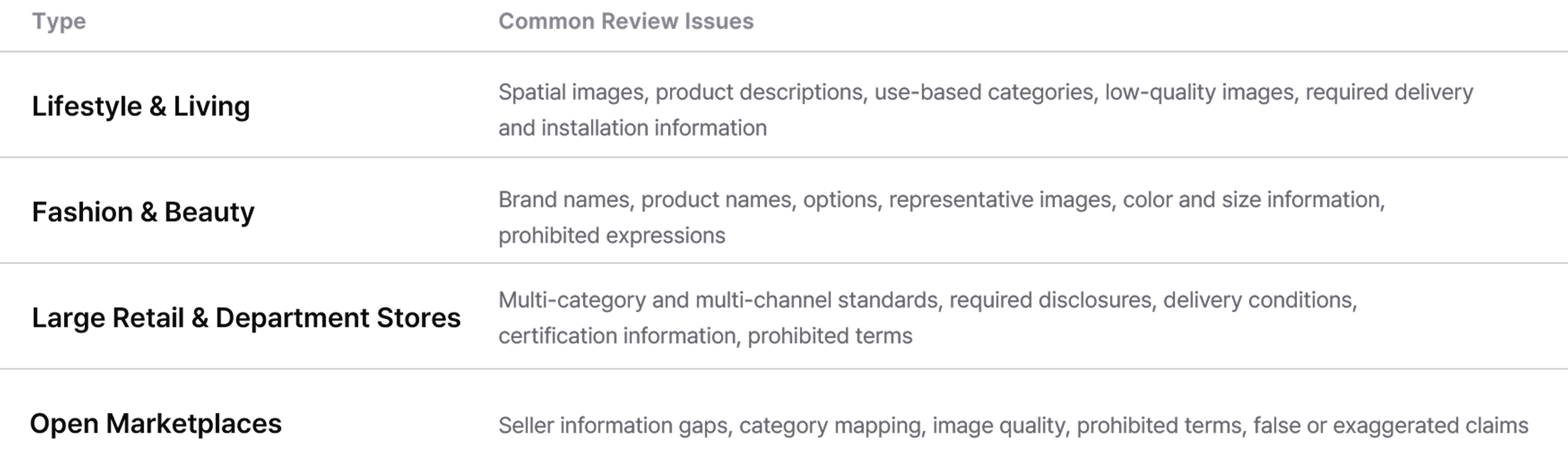
For commerce platforms, product listing review is the final quality checkpoint before content reaches customers. Inaccurate product information, images that violate platform policy, or prohibited claims can affect customer experience and brand trust.
Operations teams need to help listings go live quickly while still enforcing platform standards. For sellers, delayed listing approval can mean lost sales opportunities. For the platform, incorrectly approved listings can create regulatory risk, customer complaints, and quality issues.
Review standards are difficult to manage with a fixed checklist alone. Each product category may require different checks, and many cases require teams to evaluate text and images together. The same phrase may be allowed in one product group and restricted in another. Policy changes can also take time to reach day-to-day review operations.
In this environment, reviewing every listing manually makes it difficult to maintain both speed and quality. Adding more reviewers can increase throughput, but consistency can still drift. Approval and rejection decisions may vary based on reviewer experience, condition, and policy interpretation.
Repetitive Review Work Keeps Teams From Higher-Value Problems
Product listing review includes many repetitive checks. Teams need to confirm whether the product name follows the rules, required information is present, images meet platform policy, and the description matches the assigned category.
When this work is handled manually, operations teams spend more time clearing the queue than handling exceptions or improving policy. During promotions, seasonal campaigns, or high-volume seller onboarding, backlogs grow. Rejections and resubmissions repeat, and the operating burden increases.
The problem grows when rejection reasons and review decisions are not captured as data. If the team cannot see which rule caused the rejection, which category repeats the same issue, or which sellers keep making the same mistake, the next review cycle is hard to improve.
Product listing review does not end with a single approval decision. It also includes refining operating standards, reducing repeated errors, and feeding review data back into policy improvement.
QA Agent Gets More Precise as Review Data Accumulates
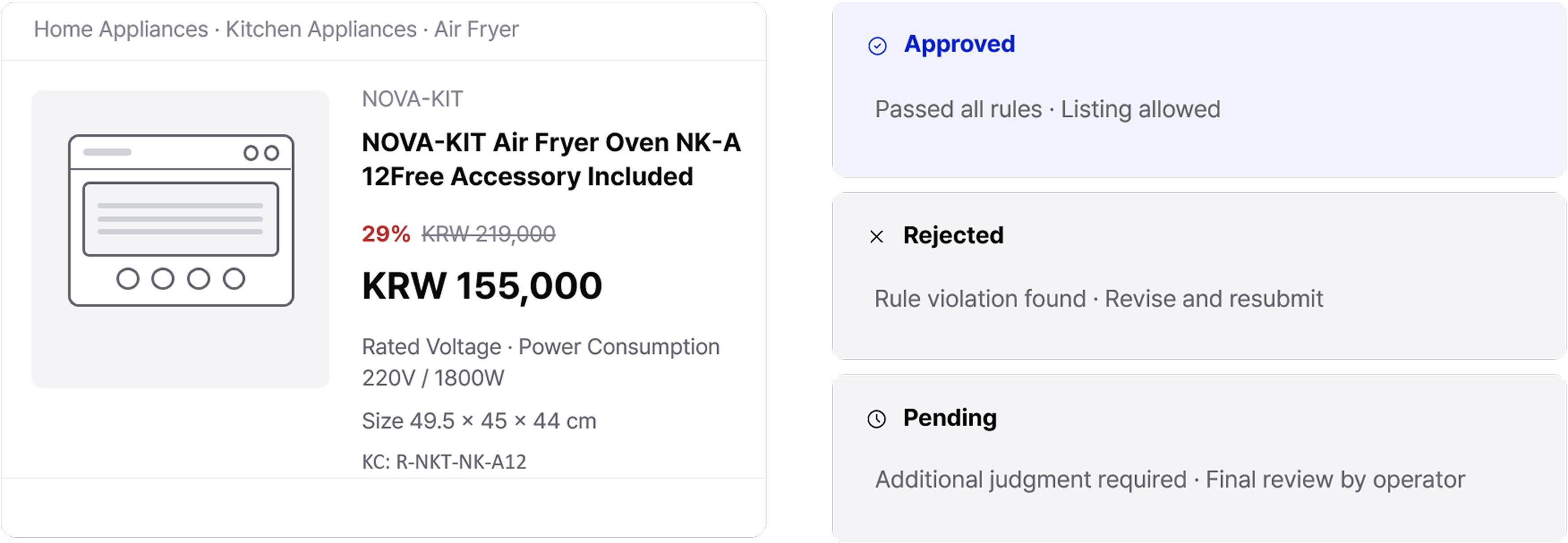
QA Agent helps move product listing review away from a process where people inspect every field manually. It turns review standards into a structure that AI can execute. Product names, descriptions, images, categories, and platform policies can be checked together, and each item can receive an approval, rejection, or hold status.
The goal is not to auto-approve every decision. Clear and repeatable checks can be reviewed by AI first. Ambiguous cases or higher-risk decisions can be routed to a human reviewer.
For example, missing product information, prohibited terms, and image policy violations can often be reviewed automatically when the criteria are clear. Cases that require policy interpretation, involve brand risk, or need exception approval should remain with human reviewers.
QA Agent also captures the review process as data. Teams can see which standard led to approval, which reason led to rejection, and which items were placed on hold. Operations teams can use these records to identify repeated errors, improve seller guidance, and refine review policies over time.
People Can Focus More on Exceptions and Policy Improvement
The best candidates for AI review are tasks with clear standards and repeated checks. Missing product information, prohibited terms, and required image checks can be filtered by AI first when the rules are well defined.
Human judgment is needed when criteria conflict, exceptions need interpretation, or business risk is high. Expressions that may affect brand risk, policy-sensitive claims, and items that require exception approval need review from an operations team member.
When QA Agent handles repetitive checks first, operations teams do not need to inspect every listing at the same level of depth. They can focus on held listings, cases with conflicting standards, sellers with repeated rejection reasons, and categories that need policy updates.
This shift improves review speed and operations quality at the same time. Applying the same standard repeatedly helps make approval and rejection decisions more consistent. It also makes the work that needs human review easier to identify. As review history accumulates, teams can see which standards cause recurring issues and which product categories produce repeated errors.
Commerce Operations Quality Starts With Consistent Review Standards
As commerce platforms grow, product listing volume grows with them. More categories and more sellers also make review standards more complex. Increasing the number of reviewers alone makes it difficult to keep operations quality stable.
When review standards drift, teams lose confidence in the results. When rejection reasons are not recorded in enough detail, the same problems keep returning. Automated product listing review helps address this by letting AI check clearly defined items first, separating exceptions for human review, and capturing review results and evidence for the next round of operational improvement.
QA Agent helps organize product listing review around standards and records. Operations teams can spend less time on repetitive checks and more time on the quality standards and policies that shape platform trust.
For growing commerce platforms, consistent review standards and accumulated review history shape the quality of operations. Automated AI review for product listings can help teams handle increasing listing volume while managing the quality of product information more reliably before it reaches customers.

in solving your problems with Enhans!
We'll contact you shortly!