


As companies grow, their talent needs change. New roles emerge, existing teams need different skills, and hiring requests arrive from several departments at once. Recruiting teams need to fill roles with the right people when the business needs them. They also need time to review each candidate’s experience and prepare for the interview.
Recruiters’ responsibilities are changing as well. LinkedIn’s Future of Talent 2026 describes a growing role for recruiters in aligning talent and skills with business needs and designing recruiting processes and experiences that use AI.
Expedia Group, for example, adopted AI to address bottlenecks in manual sourcing and resume review as it sought to hire specialists in areas such as AI and machine learning. After the company adopted AI, time to hire fell from 80 days to 50 days. Recruiters also gained more time to build candidate relationships and work with hiring managers.
Enhans’s People team faced similar challenges as the company grew. Hiring requests continued to arrive while the team compiled data and checked recruiting progress. Interviewers had to fit preparation around their regular work. To improve this process, the team began using AgentOS to transform its recruiting operations with AI.
Improving Hiring Speed and the Interview Experience
Business teams need timely visibility into recruiting progress to plan their work and staffing. They need to know how many relevant candidates have applied, how far interviews have progressed, and where the process is taking longer than expected.
Candidates want an opportunity to explain their experience and skills. They expect interviewers to have read the resumes and portfolios they carefully prepared and to understand their background before the conversation begins. Candidates also expect to move through the process without unnecessary delays.
The People team wanted to reduce the time spent gathering information and preparing materials so it could share timely updates and prevent delays in candidate reviews.
The team decided to address these problems using AgentOS. It defined the information and operating criteria it needed, then worked with developers to build tools for tracking hiring progress and preparing for interviews.
Connecting Recruiting Data and Establishing Shared Definitions
The first step was to connect recruiting data scattered across different tools.
Information was spread across an applicant tracking system (ATS) and multiple Google Sheets files. Different recruiters managed different roles. To check progress on roles managed by other recruiters, they had to look through separate systems or ask a colleague. Even tracing one candidate’s progress required comparing several records.
The People team used an ontology to connect each candidate’s application, role, interview schedule, evaluation forms, offer, and employment start details. This allowed the team to review the candidate’s history alongside hiring progress for that role.
The team also standardized reporting definitions. The team agreed on consistent definitions for counting interviewees, successful candidates, and new hires. Incoming employees were grouped by start date. The team also automated the entry of candidate information into a separate sheet at the offer negotiation stage.
The People team defined the information and shared criteria based on its daily work. It worked with developers to incorporate weekly review items, procedures for each stage, and exceptions into the system.
Using a Shared View of Hiring to Decide What Comes Next
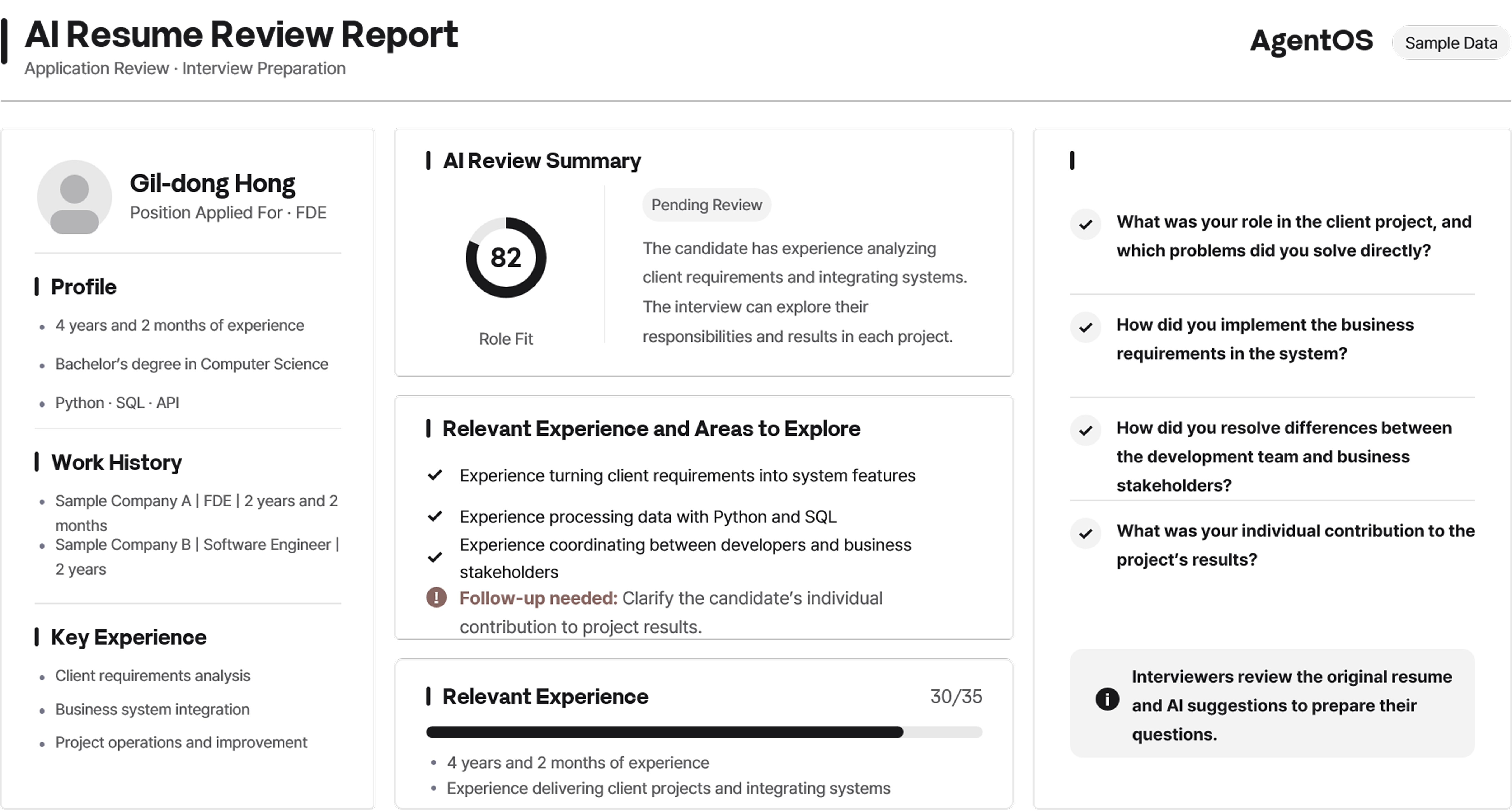
The People team used the connected data to build a hiring dashboard. It could now review applications by role and source, along with each candidate’s current stage, in one place.
The dashboard shows which roles need more applicants and where candidates are spending longer between stages. The team can follow progress from resume review through offer acceptance, checking interview schedules, completed evaluation forms, and days spent at each stage to identify where action is needed.
Recruiters can see one another’s progress without asking for individual updates. This makes it easier to allocate resources to priority roles and discuss whether a candidate under review might also be suited to another position.
The dashboard also changed how the team manages recruiting channels. By reviewing application sources alongside subsequent progress, recruiters can see which channels bring in suitable candidates. They also track when applications arrive to inform when and where to post openings.
Weekly hiring reports now generate figures and summary text automatically, reducing repetitive reporting work. The People team can spend more time discussing which roles to prioritize and how to resolve delays.
Preparing Interviewers to Understand Each Candidate’s Experience
Once an interview is scheduled, interviewers prepare to explore the candidate’s experience and contributions in detail.
Interviewers need to prepare while keeping up with their regular work. They need to read resumes and portfolios, identify experience relevant to the role, and develop follow-up questions. The People team built an interview preparation system in AgentOS to support thorough review even when schedules are busy.
AI uses the application materials to suggest points to explore and questions related to the role’s requirements. Interviewers review the original resume and AI suggestions themselves before putting together their questions.
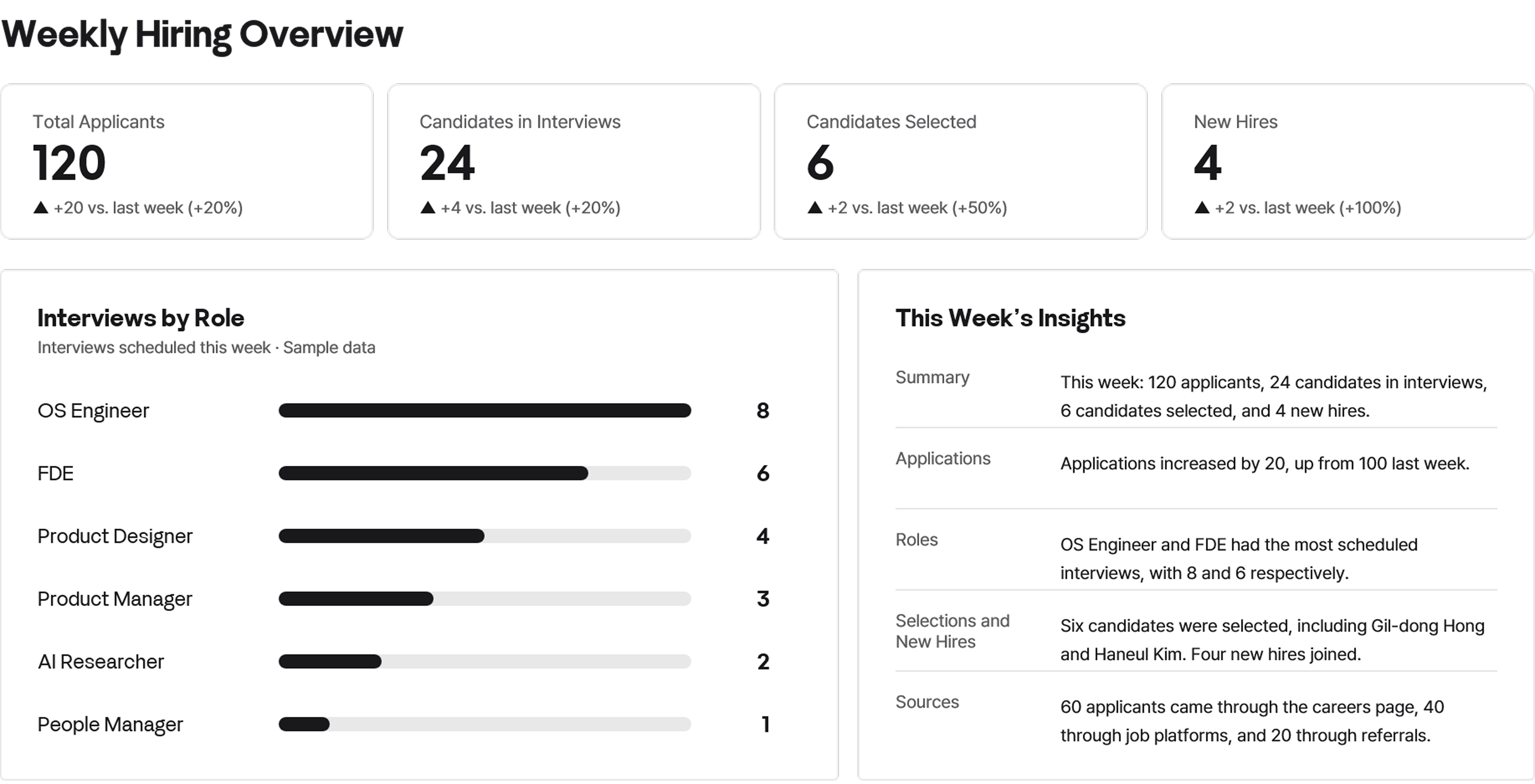
For example, if a candidate says they led a project, the interviewer can ask about their responsibilities, decision-making authority, and how they handled challenges. They can also examine the project’s results and the candidate’s individual contribution.
Interviewers prepare using shared questions and evaluation forms. The conversation then follows each candidate’s experience and context. Interviewers start with the prepared questions, listen to the answers, and ask follow-up questions to understand the candidate’s skills and contributions more deeply.
With AI supporting preparation, interviewers can cover points they might otherwise miss, while candidates have more opportunity to explain their experience in detail. This approach is improving the interview experience for both interviewers and candidates.
AI Transformation Gives Hiring Teams a Shared Basis for Decisions
Hiring requires judgment from several people. Recruiters monitor progress and delays, business teams define the skills they need, and interviewers examine candidates’ experience and contributions. Timely information sharing and consistent preparation help these teams improve hiring speed and the interview experience together.
When AI supports data collection, reporting, and interview preparation, recruiting staff spend less time finding and organizing information. They can use that time to discuss which roles need more attention and explore the problems candidates have actually solved. Candidates, in turn, can speak with interviewers who have taken the time to understand their experience.
Enhans is transforming its recruiting process by connecting hiring data and incorporating business teams’ criteria into its tools. This helps teams fill roles when needed and develop a deeper understanding of each candidate’s experience.

in solving your problems with Enhans!
We'll contact you shortly!