


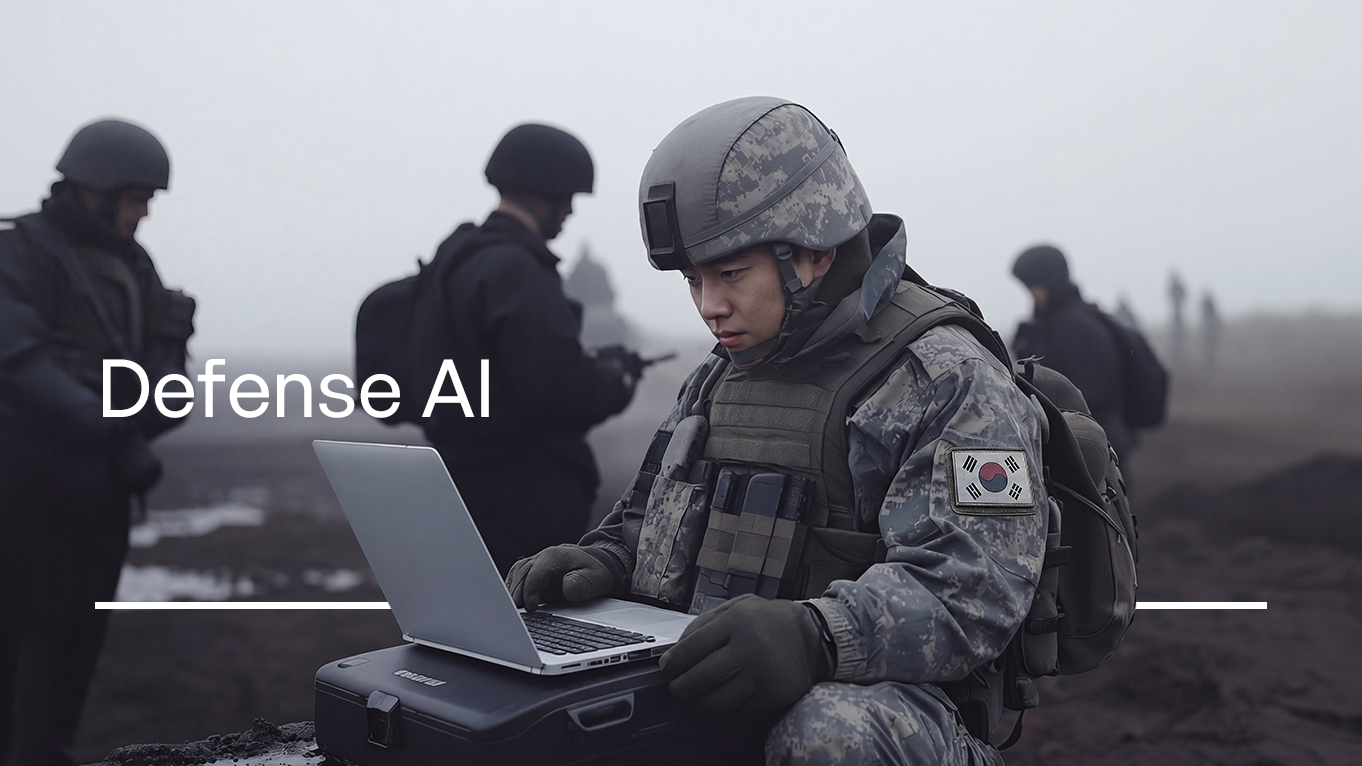
Government agencies and public institutions have nearly ideal conditions for AI automation. Clear regulations. Repetitive workflows. Consistent decision criteria. These are exactly the environments where AI performs best.
Yet according to a January 2026 Military.com analysis, the Pentagon's early AI adoption failed for a specific reason. The technology worked. The Department of Defense simply lacked complete, standardized data to support AI-driven analysis. Decades of accumulated data existed. None of it was structured in a form AI could actually use.
This gap is common across government and public sector organizations. Many set "data collection" as the first objective for AI adoption. But there is a more fundamental problem that data alone cannot close.
Why Regulations on Paper Are Not Enough for AI
Defense workflows look highly automatable. Weapons system maintenance decisions, logistics classification, operational support document processing. Each task follows defined conditions and predefined criteria. Most of it is already written in doctrine and regulations.
There is a critical difference between regulations existing in a document and the judgment logic for applying those regulations being structured in a form AI can read.
The Missing Layer in Defense Data
Between documented doctrine and AI-readable data, there is always an interpreter. Experienced personnel carry judgment frameworks that never made it into official manuals. Exception handling passed down verbally. Decision logic that exists only in someone's head.
Military.com put it directly: "The Pentagon's biggest mistake was not moving too fast. It was trying to build AI on top of decades of fragmented, outdated data systems." The U.S. GAO reached the same conclusion in its 2021-2022 reports, citing the DoD's failure to maintain complete, accurate, and standardized data for logistics, maintenance, and readiness operations. The data existed. It was not structured for AI to act on.
Knowledge structuring is the problem to solve before data. Translating the doctrine and tacit knowledge inside an organization into a form AI can read is the real starting point.
The Core Value of Defense AI: Consistency
In defense AI deployments, the measure that matters most is consistency. Same conditions. Same judgment. Regardless of who is making the call.
When two maintenance scenarios are identical but produce different outcomes depending on the technician on duty, that inconsistency directly affects operational readiness. It becomes a security risk. Sustaining consistent judgment through personnel transitions is what defense AI must deliver. And it is only achievable when the knowledge behind those judgments is structured.
Ontology Structuring: Extracting Tacit Knowledge
Defense organizations carry two types of knowledge. Explicit knowledge: doctrine, regulations, technical manuals. Tacit knowledge: judgment frameworks that exist only inside experienced personnel.
AI cannot act on either type as-is. A five-hundred-page technical manual is still just a text block to an AI system if the relationships between regulations, their priority order, and exception conditions are not structured in a form the system can reason over.
Ontology converts both types into a machine-readable structure. FDEs (Forward Deployed Engineers) begin this work on-site, extracting how decisions are actually made and formalizing that logic before any system is built.
The first conversation FDEs have on-site tends to follow a familiar pattern.
"Why was this case handled this way?"
"There's a precedent. A similar situation came up a few years ago, and that's how it was handled."
"Is that precedent documented anywhere?"
"No. It was passed down verbally during handover."
This exchange repeats. Priority hierarchies between regulations. Exception handling approaches. Criteria for edge cases. Knowledge that has lived only in institutional memory for decades is surfaced through interviews and workflow analysis. When that knowledge is converted into ontology, AI can execute judgments specific to the organization. Operation orders and rules of engagement become rule systems AI can reason over. Multiple AI agents can collaborate to draft operational orders automatically.
Three Automation Use Cases Common in Defense Organizations
Maintenance judgment automation based on technical documentation. The U.S. Navy's publicly reported work on integrating maintenance, personnel, and training data into a unified readiness analysis system showed a reduction in combat readiness variance across the fleet. Structuring data created the foundation for consistent judgment, not just faster processing.
Multi-constraint resource and personnel allocation. Qualification levels, maintenance history, equipment availability. When these overlapping constraints are defined in ontology, AI can produce executable scheduling decisions.
Domain-specific knowledge-based judgment systems. Technical document retrieval, operational support interpretation, signal analysis against organizational rules and historical cases. When the accumulated cases and judgment criteria an organization has built over decades are structured into ontology, AI can deliver conclusions in the organization's own terms.
The Era of Automated Judgment
In South Korea, this shift is already underway. The Republic of Korea Navy has publicly stated its intent to apply AI to combat systems to enable faster command decisions and threat responses. The transition from reactive logistics to predictive, intelligent operations is a stated priority.
Across military operations, millions of judgment calls are made daily. Outcomes vary by personnel. When experienced operators leave, institutional knowledge leaves with them. When that structure changes, the impact on force readiness extends well beyond efficiency gains.
The first question any defense or public sector organization needs to answer is this: Is our organization's operational knowledge structured in a form AI can actually read today?

in solving your problems with Enhans!
We'll contact you shortly!